.png)
Where the Wild Things Are
Three extraordinary journeys reveal a more compelling way to encounter the natural world, from mountain gorillas beneath Rwanda’s Virunga volcanoes and the returning wilderness of South Africa’s Eastern Cape to an underwater world taking shape along Saudi Arabia’s Red Sea coast

There are journeys measured in kilometres, and others measured in encounters.
A shadow moving through bamboo high in Rwanda’s volcanic north. An elephant appearing from the bush as morning breaks over the Eastern Cape. The sudden flicker of a green turtle beneath the surface of the Red Sea. These are moments that resist being reduced to an itinerary. For all the increasingly sophisticated architecture, restaurants, spas and private villas surrounding them, the real luxury is something considerably less controllable: being close enough to the wild to understand that it does not exist for us.
That idea is changing some of the world’s most compelling nature led journeys. Wildlife travel was once largely organised around the sighting, with destinations measured by the animals a traveller could hope to find and the photographs they might return home with. The more interesting experiences today ask for greater engagement with the landscape around those animals, the conservation pressures shaping it and the people whose work allows wildlife to remain there.
In Rwanda, that means entering the misty forests of the Virunga Massif on foot. In South Africa, it means travelling through land that has been restored as wilderness and understanding the conservation machinery operating behind a safari. In Saudi Arabia, where an entirely new tourism landscape is emerging along the Red Sea, the encounter moves underwater, towards coral reefs, seagrass, mangroves and the marine species inhabiting them.
Three very different places. Three very different interpretations of what travelling into the wild can now mean.
Rwanda: Into the Virungas

Morning arrives differently in the mountains. At One&Only Gorilla’s Nest, close to the edge of Volcanoes National Park in northwestern Rwanda, eucalyptus rises around freestanding treehouses and suites while the great volcanic landscape of the Virungas sits beyond. The hotel feels deliberately absorbed into its surroundings, with accommodation suspended among gardens and trees rather than arranged as a conventional resort.
But this is a place where the room is only the beginning. Volcanoes National Park protects a dramatic mosaic of bamboo forest, evergreen vegetation, heath, swamp and grassland across the slopes of five volcanoes. Somewhere within that landscape live endangered mountain gorillas, alongside rare golden monkeys and an extraordinary concentration of birdlife.
Reaching the gorillas requires effort. The PR material notes that treks can take between three and seven hours depending upon the location of a gorilla family, moving through bamboo covered slopes before the encounter itself. There is something important about that uncertainty. The animal is not brought conveniently towards the traveller. The traveller goes into its world.
The forest changes the scale of the experience. Vegetation closes around the path. The altitude makes itself known. Boots collect mud. Then, after hours spent looking for signs of movement, a gorilla may appear among the green. The encounter carries particular weight because the story of the mountain gorilla is inseparable from conservation. Rwanda is currently pursuing a major expansion of Volcanoes National Park, with plans to increase its area by almost a quarter. The restoration project is intended to enlarge gorilla habitat and, according to Visit Rwanda, could support a 15 to 20 per cent increase in the population while reducing infant mortality.
It means the trek exists within a much larger story, one in which tourism, habitat and surrounding communities are closely connected. Rwanda’s annual Kwita Izina ceremony has made that relationship unusually visible, celebrating new mountain gorilla births while drawing attention to the rangers, trackers, researchers and communities involved in their protection.
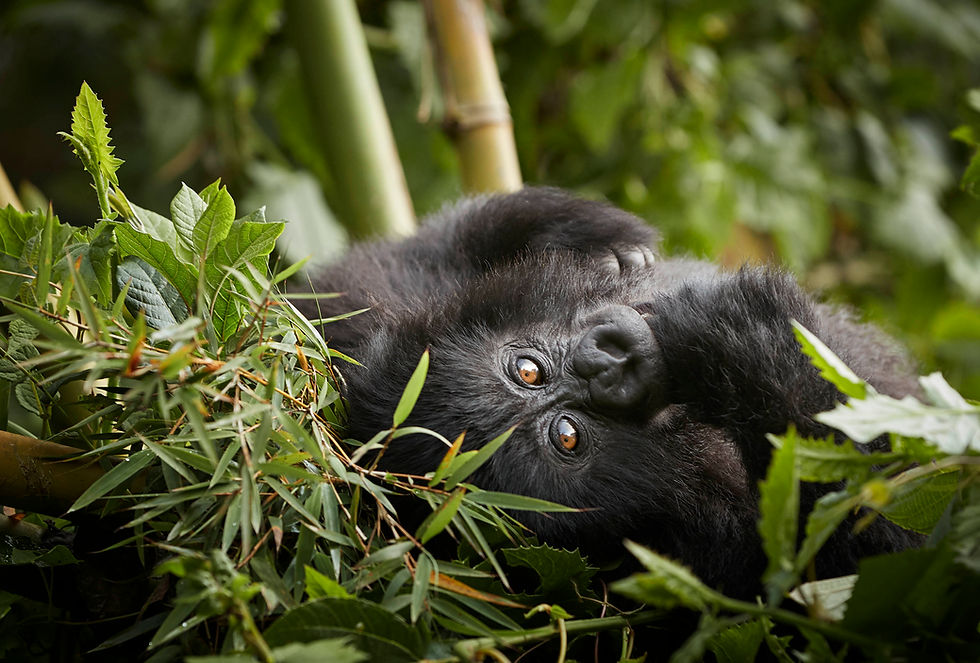
There is more here than gorillas. Golden monkey tracking takes travellers back into the forest, while the wider landscape opens onto hiking and other outdoor exploration. At Gorilla’s Nest itself, Rwandan culture is woven into the stay through coffee experiences, local performance and visits to community projects, while the spa draws upon the surrounding environment. One post trek treatment is designed specifically for bodies returning from demanding days in the forest, while another uses locally sourced Rwandan coffee.
It creates an appealing rhythm. Adventure in the morning, restoration afterwards. The physical intensity of the forest followed by the cocoon of the resort. Luxury does not replace the wilderness here. At its best, it gives the traveller somewhere from which to enter it.
Saudi Arabia: Beneath the Red Sea

If Rwanda asks travellers to look into the forest, AMAALA asks them to look beneath the water.
Saudi Arabia’s northwestern coastline is in the midst of an extraordinary transformation. AMAALA officially began welcoming guests in June 2026 with the opening of Four Seasons Resort and Residences AMAALA at Triple Bay. Six Senses followed in July, Rosewood in August, with Equinox and Nammos joining the destination in September. On 14 September, AMAALA Yacht Club officially began operations.
Yet some of the most interesting inhabitants arrived long before any hotel guest. Spotted dolphins and reef sharks move through these waters. Green turtles nest along protected sections of coast. Sooty falcons and other seabirds occupy the wider ecosystem. Coral reefs, mangroves and seagrass create a network of habitats around the bays. Red Sea Global describes AMAALA as a rare natural ecosystem with abundant flora and fauna, including endangered green turtle nesting sites. The original material also identifies green turtles, spotted dolphins, reef sharks and seabirds among the wildlife travellers may encounter here.
For a destination being built almost from the ground up, that creates an unusual proposition. Nature is not an excursion beyond the resort. It is the environment into which the resort has arrived.
Snorkelling and diving bring travellers into the Red Sea itself, while inland exploration shifts the perspective towards wadis, mountains and desert. The contrast is one of AMAALA’s great strengths. At one moment there is a coral reef below the surface; later, the horizon becomes rock, sand and immense open sky.

Corallium is intended to make the underwater story more legible. The marine life institute at Triple Bay combines visitor experiences with scientific research and education centred on the Red Sea ecosystem, creating a place where the marine environment can be understood as well as admired. The supplied material describes it as bringing aquarium exhibits, research and educational experiences together, while Four Seasons now offers guests dedicated tours.
This distinction matters. A turtle passing beneath a swimmer is memorable. Understanding why its nesting ground needs protection, what sustains the reef around it and how development interacts with those habitats turns a beautiful encounter into something more substantial.
There is also an intriguing tension here. AMAALA is simultaneously a luxury development of considerable scale and a destination positioning regeneration at the centre of its identity. The coming years will provide the meaningful test of that promise. For the traveller arriving now, however, there is a rare opportunity to witness a destination in its opening chapter, while the marine environment remains the protagonist of much of its story.
The hotels offer very different ways into that landscape. Four Seasons introduced AMAALA to its first guests in June, while Six Senses places wellness between beaches, a mangrove fringed lagoon and a clifftop mesa overlooking the sea. The wider destination now stretches from restorative retreats to sailing, diving and marine exploration. It is a reminder that wildlife travel does not have to mean safari. Sometimes the wilderness is blue.
South Africa: The Land Returns
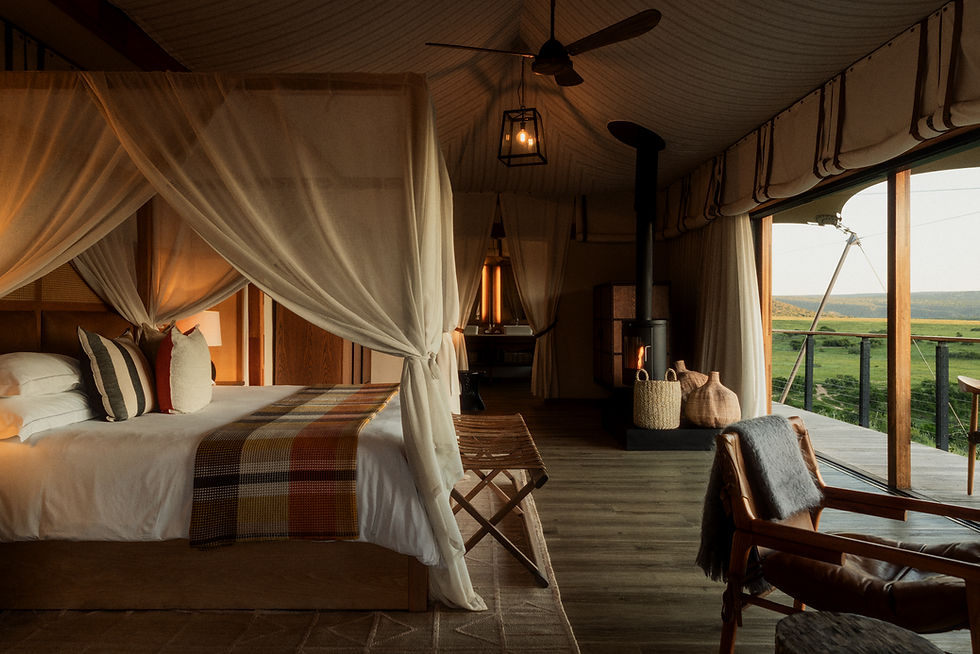
At Shamwari Private Game Reserve, the landscape tells a different story again. The reserve spreads across 25,000 hectares of malaria free wilderness in South Africa’s Eastern Cape. Five of the country’s nine biomes meet here, creating habitats for the Big Five alongside cheetah, spotted hyena and more than 370 species of birds. Six lodges and an explorer camp are distributed across the reserve.
Safari begins with anticipation, but rarely with certainty. A game drive may set out in search of lion and find elephant. A leopard may remain invisible while something much smaller captures the guide’s attention beside the track. Morning and evening reveal different versions of the same landscape. Shamwari itself makes the point that animal encounters cannot be controlled, an obvious truth that is nevertheless central to what makes a genuine safari compelling.
Twice daily game drives form the familiar rhythm, supplemented by guided walks, night drives and other experiences that allow the reserve to be read at different speeds. On foot, details easily lost from a vehicle begin to matter: tracks, plants, birds, sounds, the smaller signs revealing what passed through before you.
But Shamwari becomes more interesting when the story moves beyond game viewing. The reserve describes itself as restored wilderness, and conservation sits at the centre of its contemporary identity. Its Wildlife Rehabilitation Centre, established in 2018, treats sick, injured and orphaned animals with the objective of returning them to the wild. Human contact is deliberately limited during rehabilitation to reduce habituation and improve the animals’ chances after release.

The Born Free Foundation also operates two big cat sanctuaries in partnership with the Shamwari Foundation, providing lifetime sanctuary for rescued lions and leopards that cannot simply be returned to the wild after captivity. The partnership has operated at Shamwari since 1996.
These experiences complicate the romantic image of safari in a useful way. Wildlife conservation is not simply a pristine landscape filled with charismatic animals. It involves veterinary work, habitat management, rehabilitation, anti poaching operations, difficult decisions and, sometimes, caring permanently for animals whose previous lives make true release impossible.
For a traveller, seeing that work changes the context of the next game drive. The lion in the distance is no longer simply a sighting to tick from a list. The landscape itself becomes part of the experience.
A Different Kind of Luxury
Perhaps that is what connects these three journeys most convincingly. One&Only Gorilla’s Nest, AMAALA and Shamwari occupy radically different ecosystems and offer very different forms of hospitality. One leads into the high altitude forests of Rwanda. Another opens onto the still comparatively unfamiliar marine world of the Saudi Red Sea. The third stretches across a vast restored reserve in South Africa.
Yet each suggests that the most memorable wildlife journey is increasingly the one that allows the destination to remain bigger than the hotel. There will always be pleasure in returning from the forest to a beautiful room, stepping out of the sea and into a spa, or sitting down to dinner after hours spent crossing the bush. Comfort matters. So does design. For many travellers, they make remote landscapes accessible in a way that would otherwise feel impossible.
But the hierarchy is important. The gorilla should be more extraordinary than the suite. The reef should command more attention than the pool. The elephant appearing unexpectedly at the edge of the bush should be the story told long after the thread count has been forgotten.
Perhaps this is where nature led luxury travel becomes most interesting. It stops trying to make the wild more convenient and begins creating better ways for travellers to meet it on its own terms.
Because the greatest privilege in these places is not having nature brought to your door. It is being allowed, briefly, through nature’s.


Comments